
Products
Recommend Products
Contact Us
| Email: | info@sanchangpump.net |
| Hotline: | +86 181 4266 2779 |
| +86 193 1300 1794 | |
|
Wechat: |
+86 181 4266 2779 |
|
WhatsApp: |
+86 181 4266 2779 |
| Address: | No.517,Xiangfu Road |
| Yuhua District, | |
| Changsha City | |
| Hunan Province, P.R.C |

FY Type Stainless Steel Corrosion-resistant Vertical Sump Pump
Classification:
Submersible Pump
Water Conservancy
Energy-saving Renovation
Mining
Key words:
Vertical Sump Pump
Stainless Steel Corrosion-resistant Pump
Centrifugal Water Pump


Hotline:
- Product Description
- Performance Parameters
- Installation Drawings
- Installation and Operation
- Faults and Solutions
-
- Commodity name: FY Type Stainless Steel Corrosion-resistant Vertical Sump Pump
Flow Range: 100~1600 m3/h</br> Head Range: ~ 1000 m</br> Applicable Temperature: -40~85 ℃</br> Design Pressure: 16 Mpa</br></br></br></br></br></br>
Product Description
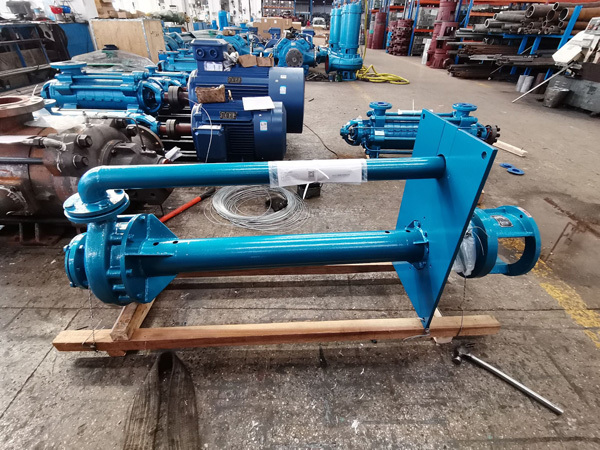
The FY series vertical sump pump is a new type of pump developed by our company. It is optimally redesigned based on traditional corrosion-resistant vertical sump pumps, integrating advanced equivalent product technologies from Sulzer, Switzerland. This pump eliminates the mechanical seal commonly adopted by other vertical sump pumps and is equipped with uniquely structured impellers. Featuring high efficiency, energy conservation, zero leakage and ultra-long service life, it is widely used in petroleum, chemical, pharmaceutical, papermaking, metallurgy, wastewater treatment and other industries.
Overview
The FY series vertical sump pump is a long-shaft vertical centrifugal pump. All wetted parts are made of cast steel or stainless steel. The submersible depth ranges from 0.5 m to 6 m as customized by customers. Its working assembly is fully submerged in liquid, delivering a wide application range and high efficiency with self-priming capability. The axial and radial forces generated during operation are borne by rolling bearings above the liquid level and sliding bearings submerged in liquid respectively, enabling quiet and low-noise operation. It is a high-tech product integrating environmental protection and energy saving.
Structure Description
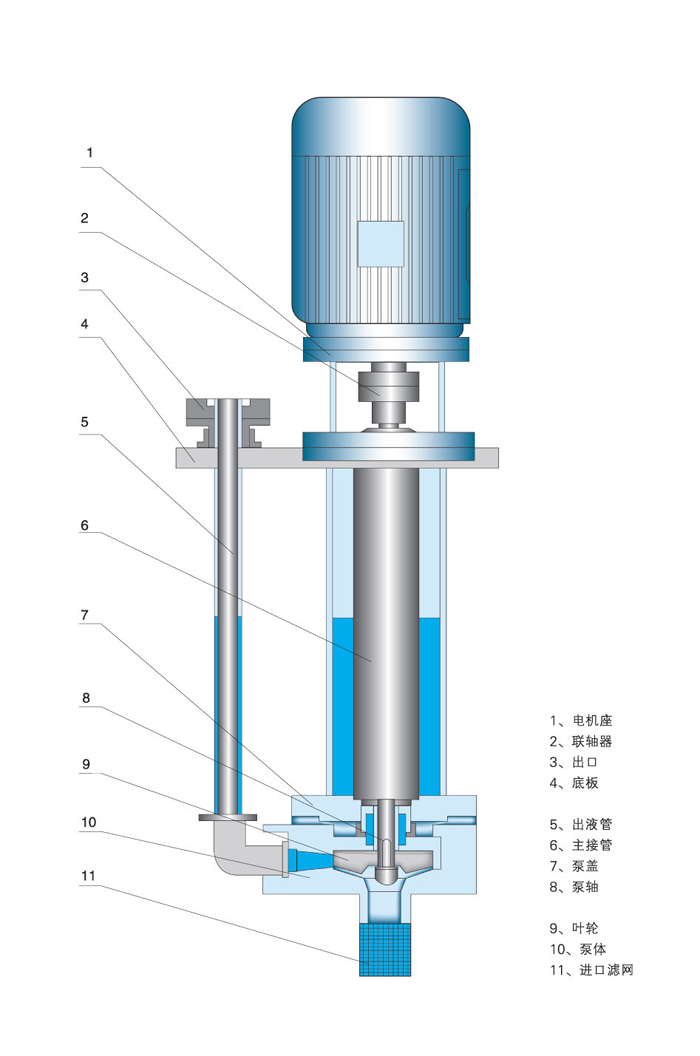
FY type is mainly consists of pump casing, pump cover, impeller, flexible shaft coupling, pipe flange, guide bearing, intermediate pipe, upper & lower discharge pipes, bearing bracket, base plate and other components. The suction inlet is coaxial with the pump shaft, while the discharge outlet runs parallel to the shaft. Viewed from the motor end, the pump rotates clockwise.
The vertical motor of the FY series pump is fastened to the motor base with double-ended studs and directly coupled to the pump via a flexible coupling. The pump casing, intermediate pipe, bearing bracket, discharge pipe and pipe flange are bolted into an integral assembly fixed on the base plate; the entire pump unit is mounted on the tank via the base plate. Except for wetted components, major parts including the motor base, bearing bracket and base plate are made of cast iron.
All axial and radial forces (including hydraulic pressure inside the pump cover, weight of impeller and rotor assembly, etc.) are supported by single-row thrust roller bearings, double-row self-aligning ball bearings inside the bearing housing, as well as sliding guide bearings. For safe and stable operation, the two rolling bearings are lubricated with grease. If the conveyed liquid contains a normal small amount of solid particles, the guide bearing shall be lubricated by an external supply of clean liquid.
A J-type skeleton oil seal is installed at the clearance between the sealing plate and shaft to prevent leakage of corrosive gas. Impellers are available in closed and semi-open designs according to the viscosity of conveyed media; closed impellers are the standard configuration. In addition, FY series pumps are divided into two structural types based on submergence length: designs with intermediate guide bearings and designs without guide bearings.
1. As a vertical sump pump, it features an elegant appearance and can be directly mounted on the medium storage tank without extra floor space, reducing infrastructure investment.
2. Mechanical seals are omitted, eliminating frequent maintenance caused by rapid mechanical seal wear on conventional vertical sump pumps, cutting operating costs and improving working efficiency.
3. Unique centrifugal double-balanced impeller: for clean media free of solid particles, it delivers extremely low vibration & noise and high efficiency. Open double-balanced impeller: for unclean liquids containing solid particles and short fibers, it ensures stable operation without clogging.
Application
1. Allowable temperature of conveyed media: -20 ~ 140 ℃
2. For cast iron pumps: applicable media pH range 5–9
3. For pumps fitted with open impellers: the diameter of solid particles in conveyed liquid shall not exceed 30% of the pump suction inlet diameter.
Model Description
Example: 50FYB-25AK
50 -- Pump suction inlet diameter 50 mm
FY -- Vertical Sump Pump
B -- Material 1Cr18Ni9Ti stainless steel
25 -- Rated head 25 m
A -- Impeller with first trimming
K -- Open-type impeller
-
Flow Range: 100~1600 m3/h
Head Range: ~ 1000 m
Applicable Temperature: -40~85 ℃
Design Pressure: 16 Mpa
-
-
Disassembly and Assembly
1. If the impeller needs to be inspected or replaced, close the discharge valve, remove the flange bolts and base plate connecting bolts, then lift the pump out of the tank with lifting equipment.
2. Hang the base plate on a support stand, remove all bolts of the pump casing, take out the pump cover and impeller nut, then tap the pump casing gently with two hammers to detach the impeller.
3. When replacing rolling bearings or packing, keep the base plate fixed. Only remove the motor and corresponding support bracket, detach the pump coupling, gland and round nut, then take out the bearing housing. For packing replacement, remove the packing gland first, then take out the old packing and install new packing.
4. Assembly shall be carried out in the reverse order of disassembly. Strict attention must be paid to the concentricity of all shaft-mounted components.
Installation, Operation and Maintenance
1. After pump assembly, turn the coupling by hand to check free rotation. Listen for metallic rubbing noise and verify all component nuts are fully tightened.
2. Check the concentricity between pump shaft and motor shaft: the radial offset of the two coupling outer circles shall not exceed 0.1 mm, and the end face clearance between couplings shall be kept at 1 ~ 2.5 mm.
3. The distance from the pump suction inlet to the tank bottom shall be 2 to 3 times the suction inlet diameter; the clearance between pump casing and tank wall shall be more than 2.5 times the inlet diameter.
4. A separate support bracket shall be provided for the pump discharge pipeline; the pipeline weight shall not be borne by the pump unit.
5. Verify the motor rotation direction to ensure it matches the marked rotating direction of the pump.
6. Close the gate valve and pressure gauge on the discharge pipeline, then connect the cooling water pipe.
7. Start the motor, turn on the pressure gauge, slowly open the discharge gate valve to the required opening, and put the pump into normal operation.
8. Inspect the pump and motor regularly. The bearing temperature rise shall not exceed 75 ℃, and sufficient grease shall be filled inside the bearing housing.
-
I. Pump Fails to Start
1. Power supply failure: Inspect power switches and wiring circuits.
2. Motor wiring fault: Check motor wiring connections.
3. Internal pump clogging: Examine the pump interior for foreign debris.
4. Motor breakdown: Verify whether the motor is damaged.
II. Reduced Pump Flow Rate
1. Air leakage from pump casing: Inspect shaft seals, sealing rings and valves for damage.
2. Air leakage at inlet valve: Check if the valve sealing ring is broken.
3. Foreign objects inside pump chamber / internal friction / blockage: Clear foreign materials and accumulated deposits inside the pump.
III. Excessive Noise During Pump Operation
1. Loose fit between pump base plate and support bracket: Reinstall or replace the support bracket.
2. Poor sealing contact between pump casing and pump body: Adjust axial clearance to ensure tight fitting.
3. Damaged bearing or ingress of foreign particles: Replace the bearing.
IV. Excessive Pump Temperature Rise
1. Pump overheating or burnout: Inspect damaged components and replace defective parts.
2. Worn bearing or insufficient lubrication: Check bearings and lubrication system; replace bearings and replenish lubricant.
The above lists common faults and corresponding solutions for vertical sump pumps. Users shall perform regular maintenance during pump operation and troubleshoot faults in a timely manner according to actual conditions. This practice can extend the service life of vertical sump pumps and ensure safe production.
Customer Case
Send Inquiry
If you are interested in our products, please leave us a message and we will reply to you as soon as possible, thank you!



Hunan Sanchang Pump Co., Ltd.
| Email: | info@sanchangpump.net |
| Hotline: | +86 181 4266 2779 |
| +86 193 1300 1794 | |
| Mobile/Wechat/WhatsApp: | +86 181 4266 2779 |
| Address: | No.517,Xiangfu Road, Yuhua |
| District, Changsha City | |
| Hunan Province, P.R.C |
