
Products
Recommend Products
Contact Us
| Email: | info@sanchangpump.net |
| Hotline: | +86 181 4266 2779 |
| +86 193 1300 1794 | |
|
Wechat: |
+86 181 4266 2779 |
|
WhatsApp: |
+86 181 4266 2779 |
| Address: | No.517,Xiangfu Road |
| Yuhua District, | |
| Changsha City | |
| Hunan Province, P.R.C |

ISG Type Vertical Single-stage Inline Centrifugal Pump
Classification:
Vertical Inline Pump
Urban Water Supply
Salt Chemical
Mining
Key words:
Vertical Centrifugal Pump
Pipeline Pump
Single-stage Water Pump


Hotline:
- Product Description
- Performance Parameters
- Installation Drawings
- Installation and Operation
- Faults and Solutions
-
- Commodity name: ISG Type Vertical Single-stage Inline Centrifugal Pump
Flow Range: 5.6~720 m3/h</br> Head Range: 5~125 m</br> Fluid Temperature: -20~150 ℃ (Please specify if higher than 80 ℃)</br> Inlet Pressure: 0~7.5MPa (Please specify if higher than 0.3 MPa)</br> Shaft Seal: packing seal, mechanical seal</br> Available Materials: HT200, HT250, QT600, ZG, 304, 316, 316L, 317L, 904L, CD4-MCu, etc</br></br></br>
Product Description
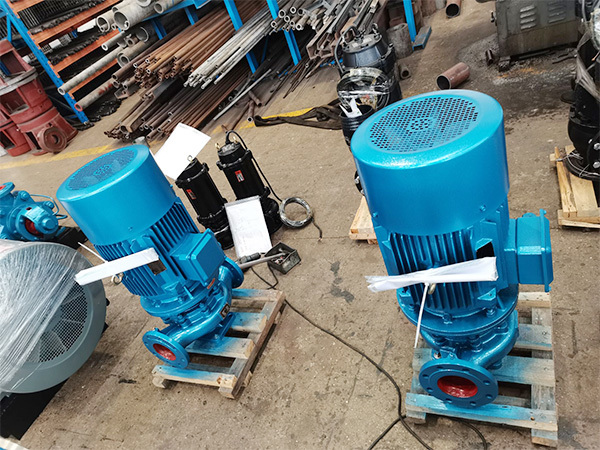
ISG type vertical inline centrifugal pump is an excellent hydraulic model selected by the scientific and technical personnel of this unit and the domestic pump experts, and the performance parameters of IS centrifugal pump are adopted, which are cleverly combined and designed on the basis of general vertical pump. At the same time, according to the use of temperature, media and other different in the ISG type based on the development of applicable hot water, high temperature, corrosive chemical pump, oil pump. This series of products have the advantages of high efficiency, energy saving, low noise and reliable performance.
In line with the latest national machinery department JB/T53058-93 standard requirements, products according to international ISO2858 standards design and manufacturing.
Overview
ISG type vertical management centrifugal pump is used for conveying clean water and other liquids with physical and chemical properties similar to clean water. It is widely applied in industrial and urban water supply & drainage, water pressurization for high-rise buildings, garden irrigation, fire fighting pressurization, long-distance liquid transmission, HVAC refrigeration circulation, cold and hot water circulation & pressurization for bathrooms, as well as supporting equipment. The applicable medium temperature is below 80℃.
Structure Description
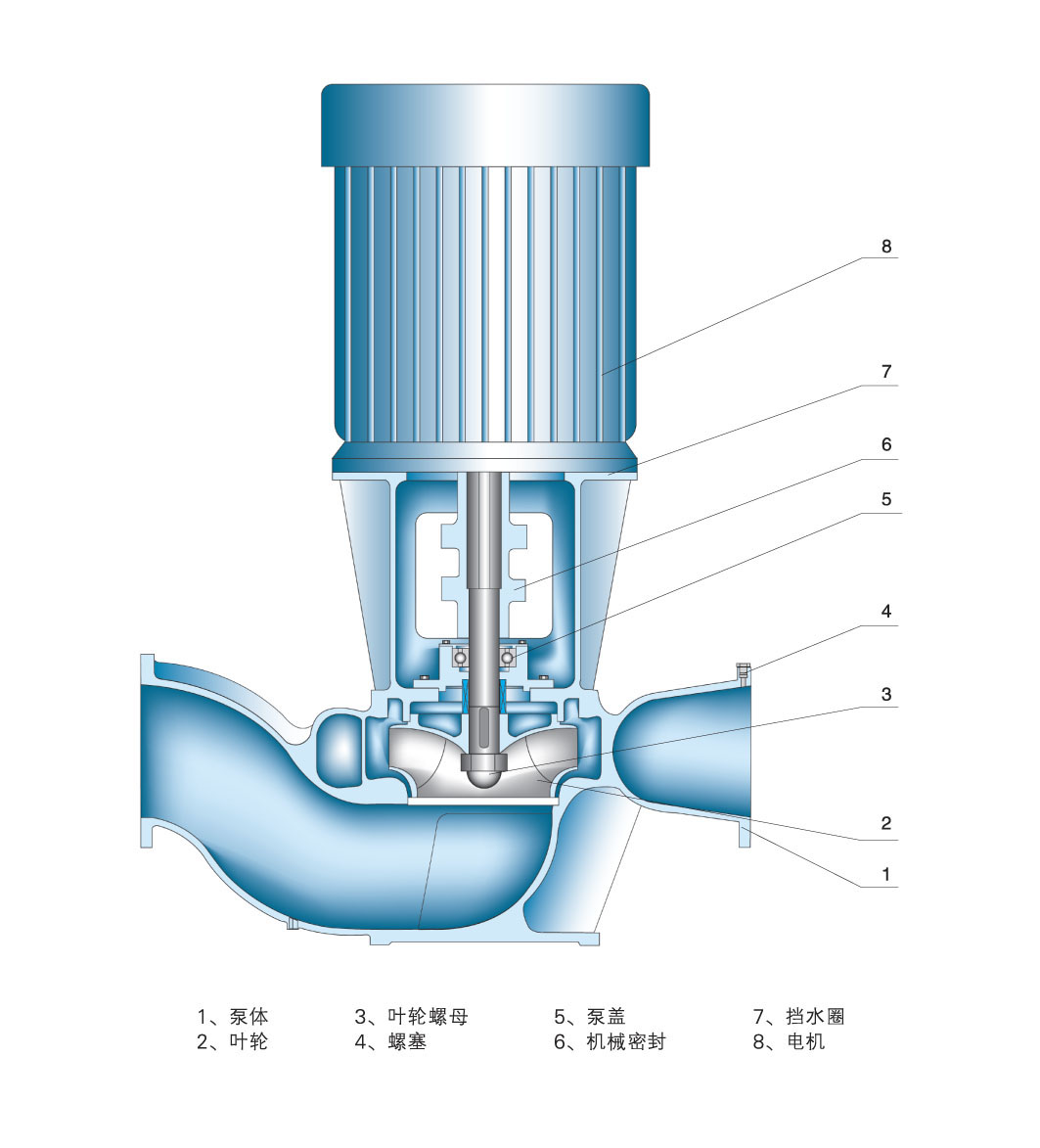
1. Designed in vertical structure, the pump features identical inlet and outlet bores arranged on the same centerline. It can be installed on inlines just like a valve. With compact and elegant appearance, it occupies little floor space and reduces construction cost. It can be used outdoors when equipped with a protective cover.
2. The impeller is directly mounted on the extended shaft of the motor, resulting in short overall axial dimension and compact structure. The bearings of pump and motor are properly configured to effectively balance radial and axial loads generated during operation, ensuring stable running with low vibration and noise.
3. The shaft seal adopts mechanical seal or combined mechanical seal. Equipped with imported titanium alloy seal rings, medium-temperature resistant mechanical seals and hard alloy components, it delivers excellent wear resistance and greatly extends the service life of the mechanical seal.
4. Easy for installation and maintenance. There is no need to dismantle the inline system. The entire rotor assembly can be pulled out simply by removing the nuts of the pump integrated base.
5. The pumps can be operated in series or parallel according to on-site requirements for flow rate and head.
6. It supports vertical and horizontal installation to adapt to different inline layouts.
Applications
ISG type vertical hot water inline pumps are suitable for pressurized circulating delivery of high-temperature hot water from boilers in metallurgy, chemical, textile, wood processing, papermaking industries, as well as hotels, bathhouses and guesthouses. They are also used for heating circulation in urban residential buildings. The applicable temperature is below 80℃.
Model Description
Example: ISG50-160(I)A(B)
50 -- Inlet and outlet diameter of the pump, 50 mm
160 -- Nominal outer diameter of the impeller, 160 mm
I -- Flow rate classification
A -- Code for first impeller trimming
B -- Code for second impeller trimming
ISG -- Single-stage Single-suction inline Centrifugal Pump
Example: ISGD50-160(I)A(B)
50 -- Inlet and outlet diameter of the pump, 50 mm
160 -- Nominal outer diameter of the impeller, 160 mm
I -- Flow rate classification
A -- Code for first impeller trimming
B -- Code for second impeller trimming
ISGD -- Low-speed Vertical inline Centrifugal Pump
-
Flow Range: 5.6~720 m3/h
Head Range: 5~125 m
Fluid Temperature: -20~150 ℃ (Please specify if higher than 80 ℃)
Inlet Pressure: 0~7.5MPa (Please specify if higher than 0.3 MPa)
Shaft Seal: packing seal, mechanical seal
Available Materials: HT200, HT250, QT600, ZG, 304, 316, 316L, 317L, 904L, CD4-MCu, etc
-
-
Start-up & Operation
1. Rotate the motor fan blade manually. The impeller shall turn freely without jamming or friction.
2. Rotate the pump by hand to feed lubricant to the mechanical seal faces.
3. Prime the pump and vent air. Open the inlet valve to fully fill the pump casing and pipelines with liquid, and ensure the inlet pipeline is well sealed.
4. Close the outlet valve to lower the starting current.
5. Switch on the power and perform inching start to confirm the correct rotation direction. The pump rotates clockwise when viewed from the motor fan end.
6. Gradually adjust the opening of the outlet valve to keep the pump running under rated conditions.
7. Stop the pump immediately for inspection if abnormal noise occurs during operation.
8. The normal leakage of the mechanical seal shall be less than 3 drops per minute. Check the motor; the temperature rise of bearings shall not exceed 70℃. Troubleshoot if the limit is exceeded.
Shutdown
1. Close the discharge pipeline valve.
2. Cut off the power supply to stop the motor.
3. Close the inlet valve.
4. Drain all liquid inside the pump if it will be out of service for a long period.
-
Fault Symptom Cause of Fault Troubleshooting Method 1. Pump does not deliver water a. Inlet/outlet valves not open, blocked pipelines, or blocked impeller flow passage.
b. Wrong motor rotation direction, or slow speed due to motor phase loss.
c. Air leakage in the suction pipe.
d. Pump not fully primed, air trapped in the pump chamber.
e. Insufficient inlet water supply, excessive suction lift, or foot valve leakage.
f. Excessive pipeline resistance or improper pump selection.
a. Inspect and remove blockages.
b. Correct motor rotation direction and tighten wiring connections.
c. Tighten all sealing surfaces to eliminate air leakage.
d. Fill the pump with liquid, open the vent valve to purge all air.
e. Shut down the pump for inspection and adjustment (this often occurs when connected to municipal water lines or used with high suction lift).
f. Reduce pipeline elbows and select a more suitable pump.
2. Insufficient pump flow a. First check causes listed in Item 1.
b. Partial blockage in pipelines/pump flow passages/impeller, scale buildup, or insufficient valve opening.
c. Low voltage.
d. Impeller wear.
a. First follow troubleshooting steps in Item 1.
b. Remove blockages and readjust valve opening.
c. Stabilize the voltage.
d. Replace the impeller.
3. Excessive power consumption a. Operating beyond rated flow.
b. Excessive suction lift.
c. Worn pump bearings.
a. Adjust flow rate by partially closing the outlet valve.
b. Reduce the suction lift.
c. Replace the bearings.
4. Noise and Vibration
a. Unstable pipeline supports.
b. Gas entrained in liquid.
c. Cavitation occurs.
d. Damaged bearings.
e. Motor operates under overload and overheats.
a. Secure the pipelines.
b. Increase suction pressure and vent gas.
c. Reduce vacuum level.
d. Replace bearings.
e. Adjust according to Item 5.
5. Motor Overheating
a. Excessive flow rate leading to overload operation.
b. Mechanical friction and interference.
c. Damaged motor bearings.
d. Insufficient voltage.
a. Throttle the outlet valve.
b. Inspect and eliminate faults.
c. Replace bearings.
d. Stabilize voltage.
6. Water Pump Leakage
a. Worn mechanical seal.
b. Sand holes or cracks on pump body.
c. Uneven sealing surface.
d. Loose mounting bolts.
a. Replace the component.
b. Weld repair or replace the pump body.
c. Refinish the sealing surface.
d. Tighten the bolts.
Previous Page
Next Page
Customer Case
Send Inquiry
If you are interested in our products, please leave us a message and we will reply to you as soon as possible, thank you!



Hunan Sanchang Pump Co., Ltd.
| Email: | info@sanchangpump.net |
| Hotline: | +86 181 4266 2779 |
| +86 193 1300 1794 | |
| Mobile/Wechat/WhatsApp: | +86 181 4266 2779 |
| Address: | No.517,Xiangfu Road, Yuhua |
| District, Changsha City | |
| Hunan Province, P.R.C |
