
Analysis of self-priming capacity of multistage centrifugal pump
Category: Pump Knowledge
2024-04-30
Multi-stage pump is a kind of high lift, high efficiency pump equipment, although its self-priming capacity is limited, but as long as the attention to selection and equipped with suction pipe and other related accessories, or self-priming effect can be achieved.
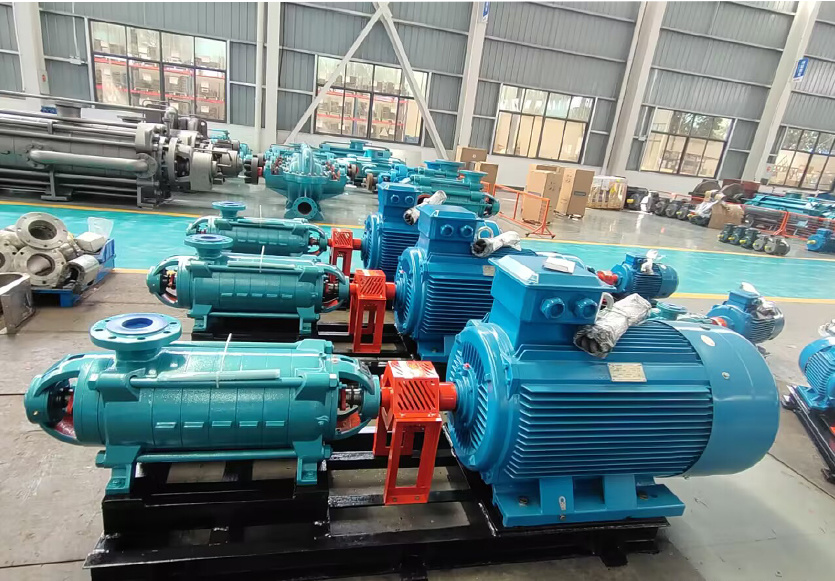
Self-priming capacity of 1. water pump
The self-priming of the centrifugal pump refers to the function of the centrifugal pump automatically sucking the liquid and transporting it to the designated position under the condition of a certain depth in the air or below the liquid level. The self-priming principle of the centrifugal pump is realized by using hydraulic negative pressure and centrifugal force, that is, a negative pressure area is formed inside the pump, and the liquid is pushed to the outlet direction by centrifugal force after entering. Through the guidance of the existing liquid, the gas-liquid mixture formed by the mixture of air and liquid reduces the suction pressure, thus realizing the self-priming.
Self-priming means that when the water pump is started or restarted, it can quickly suck the liquid in the pipeline into the pump, and continue to work and rotate under the condition of no liquid in the air. The self-priming capacity of multi-stage pumps is usually not strong, and it is generally necessary to cooperate with the suction pipeline or use other pumps to increase the pressure to start.
Under normal circumstances, the single-stage centrifugal pump has a certain self-priming capacity, but by the working principle and manufacturing process and other factors, the self-priming capacity of the multi-stage pump will be reduced. Therefore, if you need a multi-stage pump to achieve self-priming effect, you need to choose a suitable multi-stage pump model, fully tested before use, and equipped with corresponding suction pipes and other accessories.
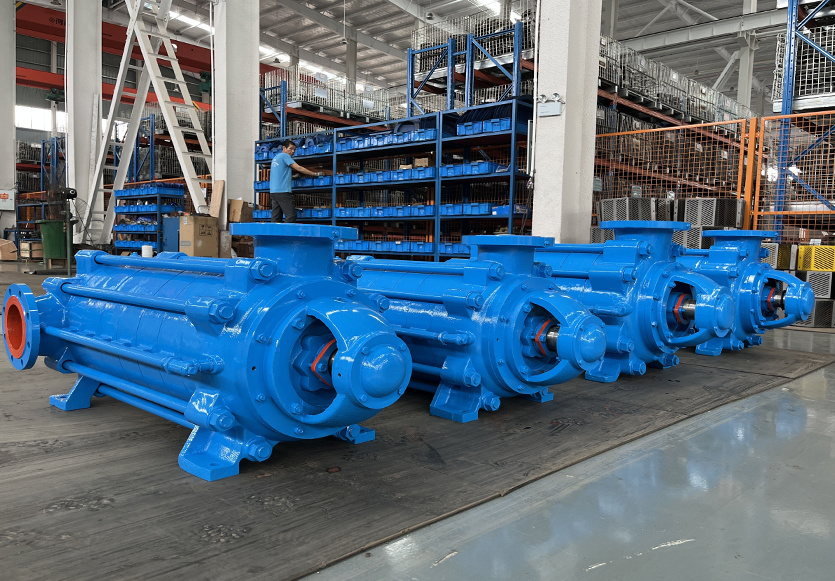
The working principle of 2. multi-stage pump
Multi-stage pump is a kind of pump that uses the rotation of the rotor to suck the liquid from low and transport it to high. Its working principle can be summarized as the following steps:
1. First, the water is introduced into the pump through the water inlet and enters the first stage impeller of the pump;
2. The first-stage impeller rotates to generate centrifugal force to push the water outward, while forming a bubble in the pump casing;
3. The bubbling continues to move outward with the rotation of the impeller, and is eventually absorbed by the pump chamber in the pump casing and enters the next impeller;
4. After the rotation of the multi-stage impeller, the water forms a high-pressure outlet fluid at the output port and supplies the required equipment.
Applicable conditions for self-priming of 3. centrifugal pumps
Centrifugal pumps have self-priming capabilities, but are subject to certain restrictions and need to meet certain conditions to work properly:
1. Liquid requirements:Centrifugal pumps have the characteristics of high-speed rotation and strong centrifugal force, so the liquid that needs to be transported must be clean, free of solid particles and easy to volatilize, otherwise it will affect the performance of the pump.
2. Altitude restriction:Centrifugal pump self-priming height is generally not more than 8 meters. For different pump types and configurations, the self-priming height is also different, which needs to be determined according to the specific situation.
3. Running time:When the self-priming height of the pump exceeds its maximum level, it is necessary to allow the pump to run for a period of time after the initial operation to reduce the suction pressure, thereby helping the centrifugal pump to complete self-priming.
RELATED INFORMATION
Recommend Products
Contact Us
Free Hotline:+86 18142662779
Fixed telephone:+86 19313001794
Mobile:+86 18142662779(WeChat/WhatsAPP)
E-mail:info@sanchangpump.net




Hunan Sanchang Pump Co., Ltd.
| Email: | info@sanchangpump.net |
| Hotline: | +86 181 4266 2779 |
| +86 193 1300 1794 | |
| Mobile/Wechat/WhatsApp: | +86 181 4266 2779 |
| Address: | No.517,Xiangfu Road, Yuhua |
| District, Changsha City | |
| Hunan Province, P.R.C |
