
What is the impact of a smaller gap between the pump casing and impeller after a multi-stage high-pressure pump is installed?
Category: Pump Knowledge
2025-08-20
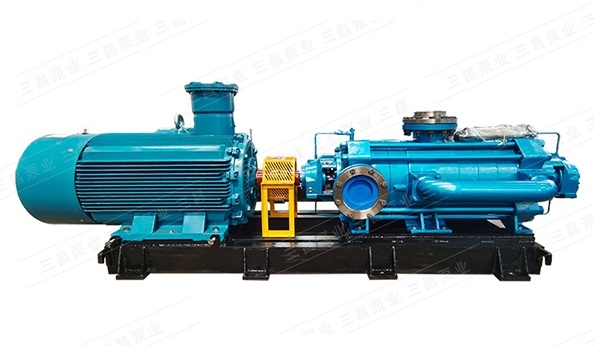
Multistage high-pressure pumps, as common fluid transport equipment in the industrial field, have their performance stability and efficiency directly related to the smooth operation of the production line and energy consumption costs. In the design and assembly process of multistage high-pressure pumps, the gap between the pump casing and the impeller is a crucial parameter. The size of this gap directly affects the pump's operating efficiency, stability, and service life.
1. Factors Affecting Pump Flow and Head
The working principle of a multistage high-pressure pump is to transport fluid from a low-pressure area to a high-pressure area through the continuous work of multiple impellers. In this process, the gap between the pump casing and the impeller plays a key role. If the gap is too small, it will increase the resistance of the fluid passing through the impeller, thereby affecting the pump's flow rate. This is specifically manifested as a decrease in the pump's outlet flow, which cannot meet design requirements or production needs. At the same time, due to the greater resistance faced by the fluid, the pump's head will also correspondingly decrease, making it impossible to transport the fluid to the designated pressure area.
2. Increased Energy Consumption and Wear
A gap that is too small not only affects the pump's flow and head but also increases the pump's energy consumption. Due to the increased resistance of the fluid passing through the impeller, the pump needs to consume more energy to overcome this resistance, leading to an increase in the motor's load. Long-term operation in this state not only increases the motor's energy consumption but may also cause problems such as motor overheating and current overload, which can severely damage the motor. Additionally, a gap that is too small will exacerbate the wear between the impeller and the pump casing. When the impeller rotates at high speed, the friction between it and the pump casing will intensify, leading to accelerated surface wear of both the impeller and the pump casing, shortening the equipment's service life.
3. Impact on Pump Stability and Reliability
The stability and reliability of multistage high-pressure pumps are crucial for the continuous operation of the production line. A gap that is too small can lead to increased vibration and noise during the pump's operation. Due to the unstable flow state of the fluid passing through the impeller, additional radial and axial forces will be generated, which can cause the pump shaft to bend or vibrate. Vibration not only affects the pump's performance but can also interfere with and harm surrounding equipment and personnel. At the same time, long-term vibration and wear can cause various components of the pump to loosen or become damaged, reducing the pump's reliability and stability.
4. Potential Safety Hazards
A gap that is too small may also lead to safety hazards. Due to the reduced flow and head of the pump, in order to meet production needs, operators may increase the pump's speed or adjust other parameters, further exacerbating the pump's load and wear. In extreme cases, this may lead to sudden pump failure or safety accidents. Additionally, the vibration and noise caused by a gap that is too small may adversely affect the physical and mental health of the operators.
5. Increased Maintenance Costs and Difficulty
The problems caused by a gap that is too small between the pump casing and the impeller of a multistage high-pressure pump often require continuous adjustments and maintenance during equipment operation. Since a small gap may cause damage or wear to multiple components, maintenance requires checking and repairing multiple aspects. This not only increases the difficulty and complexity of maintenance but also raises maintenance costs. At the same time, the need for frequent downtime for maintenance also affects the continuous operation of the production line and the production efficiency of the enterprise.
In summary, a gap that is too small between the pump casing and the impeller of a multistage high-pressure pump can lead to many adverse effects, including affecting the pump's flow and head, increasing energy consumption and wear, impacting the pump's stability and reliability, causing safety hazards, and increasing maintenance costs and difficulty. Therefore, when designing and assembling multistage high-pressure pumps, the gap size between the pump casing and the impeller should be strictly controlled to ensure it meets design requirements. At the same time, during use, regular inspections and maintenance of the equipment should be conducted to promptly identify and resolve issues such as a gap that is too small, ensuring stable operation of the equipment and extending its service life.
RELATED INFORMATION
Recommend Products
Contact Us
Free Hotline:+86 18142662779
Fixed telephone:+86 19313001794
Mobile:+86 18142662779(WeChat/WhatsAPP)
E-mail:info@sanchangpump.net




Hunan Sanchang Pump Co., Ltd.
| Email: | info@sanchangpump.net |
| Hotline: | +86 181 4266 2779 |
| +86 193 1300 1794 | |
| Mobile/Wechat/WhatsApp: | +86 181 4266 2779 |
| Address: | No.517,Xiangfu Road, Yuhua |
| District, Changsha City | |
| Hunan Province, P.R.C |
