
What are the basic parameters of a pipeline pump?
Category: Pump Knowledge
2024-10-23
Pipeline PumpIt is a device widely used for liquid transportation, and its basic parameters are crucial for selecting and using the equipment. The following are the main basic parameters of a pipeline pump.
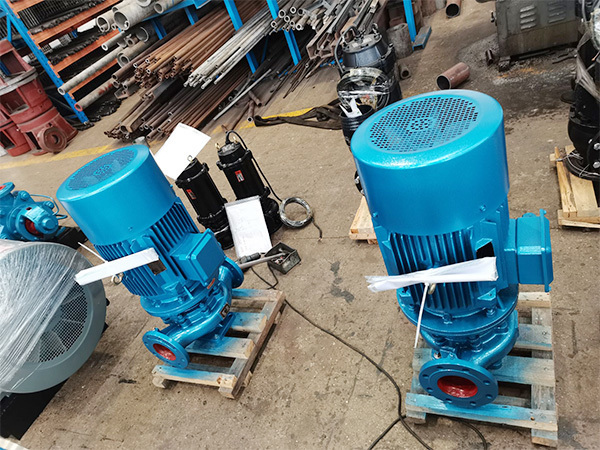
1. Flow Rate (Q): The volume or mass of liquid delivered by the pump in a unit of time, usually expressed in liters per second (L/s) or cubic meters per hour (m³/h). Flow rate is one of the key parameters for evaluating pump performance, directly related to the delivery capacity of the pipeline pump.
2. Head (H): The work done by the pump on a unit weight of liquid, that is, the increase in energy gained by the liquid under the action of the pump. It is usually expressed in meters (m) or kilogram-force per centimeter (kgf/cm). The head determines the vertical height to which the pipeline pump can deliver liquid or the resistance it can overcome.
3. Rotational Speed (N): The rotational speed of the pump impeller, measured in revolutions per minute (rpm). The rotational speed affects the flow rate and head of the pump, and different models of pipeline pumps have different speed ranges.
4. Power (P): The power obtained by the pipeline pump from the prime mover, used for liquid transportation. The unit of power is usually kilowatts (kW) or horsepower (hp). In practical use, it is important to distinguish between rated power and actual power.
5. Efficiency (η): The ratio of the effective power delivered by the pipeline pump to the input power, indicating the working efficiency of the pump. The higher the efficiency, the less energy consumption.
6. Allowable Suction Vacuum Height: A parameter that measures the maximum allowable vacuum value between the liquid surface and the center of the impeller of the pipeline pump, related to the impeller structure, cavitation margin, etc. This parameter is crucial for ensuring the normal operation of the pump and avoiding cavitation phenomena.
7. Inlet and Outlet Diameter: The diameter of the inlet and outlet of the pipeline pump, usually expressed in millimeters (mm). Choosing the appropriate inlet and outlet diameter is essential for ensuring flow rate and preventing overload.
In addition, there are other parameters such as shaft power and cavitation margin, which are also important indicators for evaluating the performance of pipeline pumps. The selection of these parameters should be based on actual needs and operating conditions to ensure the operation and longevity of the pipeline pump. When selecting and using pipeline pumps, attention should also be paid to their material, structural form, and other characteristics to ensure their suitability for specific liquid transportation tasks. In summary, understanding these basic parameters helps in better selecting and using pipeline pumps, and the above content is for reference.
RELATED INFORMATION
Recommend Products
Contact Us
Free Hotline:+86 18142662779
Fixed telephone:+86 19313001794
Mobile:+86 18142662779(WeChat/WhatsAPP)
E-mail:info@sanchangpump.net




Hunan Sanchang Pump Co., Ltd.
| Email: | info@sanchangpump.net |
| Hotline: | +86 181 4266 2779 |
| +86 193 1300 1794 | |
| Mobile/Wechat/WhatsApp: | +86 181 4266 2779 |
| Address: | No.517,Xiangfu Road, Yuhua |
| District, Changsha City | |
| Hunan Province, P.R.C |
