
Factors Affecting the Cavitation Margin of Hot Water Pumps and Solutions
Category: Pump Knowledge
2024-10-17
Hot water pumpThe cavitation margin refers to the ability of a hot water pump to withstand a certain degree of cavitation during operation without causing failure or affecting normal work. However, the cavitation margin is influenced by various factors, including water quality, pump design, and operating conditions. Understanding these influencing factors and taking corresponding solutions is crucial for ensuring the normal operation of hot water pumps and extending their service life.
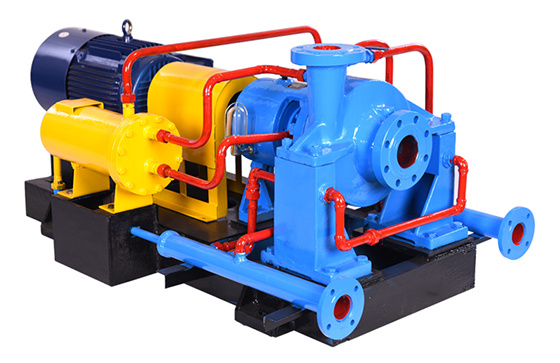
I. Factors affecting the cavitation margin of hot water pumps
The cavitation margin of hot water pumps refers to the phenomenon where the performance of the pump decreases due to the dissolution or accumulation of gas within the pump during operation. The main influencing factors are as follows:
1. Liquid temperature: As the temperature increases, the vapor pressure of the liquid rises, and the solubility of gas in the liquid decreases, making cavitation more likely.
2. Pump suction pressure: The lower the suction pressure, the smaller the solubility of gas in the liquid, which makes cavitation more likely.
3. Properties of the liquid being transported: Properties such as viscosity and surface tension of the liquid affect the dissolution and accumulation of gas.
4. Pump structural design: The design of the pump's inlet pipeline, blade shape, etc., can affect the accumulation and discharge of gas.
II. Solutions
To address the issue of cavitation margin in hot water pumps, we can approach the solution from the following aspects:
1. Optimize the structural design of the pump: Reasonably design the pump's inlet pipeline and blade shape to better discharge gas. Additionally, increasing the exhaust holes within the pump body can help with gas discharge.
2. Control liquid temperature: If conditions permit, lowering the temperature of the liquid can reduce the generation and accumulation of gas. For high-temperature liquids, cooling measures can be considered.
3. Increase pump suction pressure: While ensuring the pump can operate normally, appropriately increasing the suction pressure can reduce the occurrence of cavitation. This can be achieved by adjusting the installation height of the pump or increasing the pressure in the suction pipeline.
4. Use anti-cavitation materials: Selecting materials with good anti-cavitation performance for the pump blades and body can enhance the pump's resistance to cavitation.
5. Strengthen operational maintenance: Regularly check the operating status of the pump to promptly identify and address cavitation issues. For pumps that have already experienced cavitation, measures such as reducing flow and lowering pressure can be taken to mitigate the impact of cavitation on the pump.
6. Use additives: In some cases, adding anti-cavitation additives can improve the performance of the liquid and reduce the occurrence of cavitation.
The factors affecting the cavitation margin of hot water pumps include water quality, pump design, and operating conditions, while the solutions involve maintaining good water quality, optimizing pump design structure, and ensuring reasonable operating conditions. Only by comprehensively considering these factors and taking corresponding measures can we effectively reduce the cavitation margin of hot water pumps, ensure their normal operation, and extend their service life.
In summary, the issue of cavitation margin in hot water pumps is complex and requires a comprehensive approach to consideration and resolution. In practical applications, appropriate solutions should be selected based on specific circumstances to improve the operational efficiency and lifespan of the pump.
RELATED INFORMATION
Recommend Products
Contact Us
Free Hotline:+86 18142662779
Fixed telephone:+86 19313001794
Mobile:+86 18142662779(WeChat/WhatsAPP)
E-mail:info@sanchangpump.net




Hunan Sanchang Pump Co., Ltd.
| Email: | info@sanchangpump.net |
| Hotline: | +86 181 4266 2779 |
| +86 193 1300 1794 | |
| Mobile/Wechat/WhatsApp: | +86 181 4266 2779 |
| Address: | No.517,Xiangfu Road, Yuhua |
| District, Changsha City | |
| Hunan Province, P.R.C |
