
How to select the correct pump and steps
Category: Pump Knowledge
2024-05-06
When selecting a suitable water pump, the two core elements of flow and lift (or pressure) must be roughly estimated in combination with the on-site demand. After the flow and lift are determined, the power of the water pump will be fixed. However, we generally do not recommend ordinary users to select the water pump by themselves, and we can find water pump manufacturers to sell or technicians to select more suitable water pumps more efficiently and quickly.
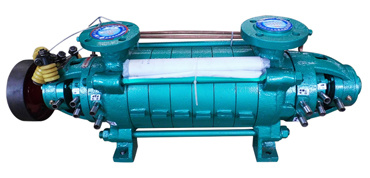
There are many types of pumps. The most used pumps in construction equipment installation projects are: centrifugal pumps, vortex pumps, reciprocating pumps, metering pumps, gear pumps, vacuum pumps, shield pumps, submersible pumps, etc. Among them, centrifugal pumps have high efficiency and simple structure., The most widely used in construction projects.
The selection of centrifugal pump is a rigorous process. First of all, it should be clear that we choose the purpose of the pump, that is, the medium that flows through the pump. The medium is diverse, including: oil, gas, liquid, cold water, hot water, etc. Different media play a vital role in choosing the correctness of the pump.
The main performance parameters of the pump are: flow, head, power, etc. Knowing these 3 parameters can generally select the required pump. (1) Flow rate: the amount of water flowing through the pump per hour, expressed in m3/h;(2) Head of the pump, the highest distance that can transport water;(3) Power: The motor power of the pump at work.
There are many kinds of pumps on the market, such as vertical single-stage pump, vertical multi-stage pump, horizontal single-stage pump, horizontal multi-stage pump, pipeline pump, centrifugal pump, self-priming pump, submersible pump, whirlpool pump, gear pump, plunger pump, reciprocating pump, diaphragm pump and many other types of pumps. With so many types of pumps, it is difficult for people with no industry experience or expertise to choose a suitable pump. There is a misconception that the vast majority of people directly consult merchants about whether there are many kilowatts of pumps when buying water pumps. It is wrong to ask, because pumps with the same power have many different parameters. If you encounter unprofessional or irresponsible merchants, you can be given a pump casually, which is impossible to solve the problem of pressurization. For pump selection we generally follow the following principles and steps:
Quantitative parameters for 1. pump selection
The pump has two core parameters: flow and head. Our quantitative process is to concretize the flow and head. The calculation of parameter quantification is complex, and the following is a brief summary:
1. Rated flow estimation
The rated flow rate is the most efficient pumping capacity of the pump, indicating how much water the pump needs to carry in a certain period of time, generally in tons/hour (t/h), cubic meters/hour (m ³/h), liters/second (L/S) or liters/minute (L/min). The flow rate is still relatively complicated to calculate accurately. The following is a simple summary according to different purposes:
Industrial use. The pump flow rate for industrial use can only be estimated by the corresponding person in charge according to the use and quantity of the machine.
Building water supply. Pump flow for building water supply.
Cooling/chilled water pump. The cooling water pump shall be calculated according to the cooling capacity of the cooling tower or air conditioning system.
High pressure test. High-pressure pressure test pumps generally require very small pump flow rates. Some closed-loop pressure tests do not require water. The specific flow rate depends on the parameter requirements of the pressure-tested machinery or components.
Domestic supercharging. If the domestic booster is a whole house booster, the general flow control is completely sufficient below 2 tons/hour. If it is a water heater booster, you only need to select a small DC pump dedicated to the water heater.
2. Rated head estimation
Rated lift refers to the vertical height that the pump can lift the rated flow, in meters (m). The rated lift is not the maximum lift, the pump works at the maximum lift when the flow is the smallest, and the pump efficiency is low at this time.
The vertical lift of the pump is generally estimated according to the vertical height of one meter equal to the lift of one meter. For example, a building with a height of 30 meters will consume at least 30 meters of pump lift. But the premise is that the pipe diameter is sufficient, otherwise it will bring a large head loss. Pump head and pressure can be converted to each other, generally according to 100 m head = 1.0MPa pressure = 10 kgf.
The head loss of horizontal liquid transportation by water pump cannot be ignored either. It is not calculated according to the head of how many meters corresponding to the length of horizontal one meter pipeline, especially the head consumption of long-distance transportation pressurization is particularly prominent.
3. Power of water pump motor
When selecting the type, priority should be given to meeting the two parameters of pump flow and lift. Simply put, you need such a large flow and lift to consume so much power. If you think the power is too large, you can only reduce the flow or lift.
Qualitative Material of 2. Pump Selection
The mainstream material of the pump is cast iron and stainless steel. The qualitative nature of the material is relatively simple, and it is right to choose stainless steel for all those with sufficient budget. If the budget is insufficient, the need is determined according to the nature of the medium.
If the building tap water is pressurized, the stainless steel vertical multistage centrifugal pump is preferred, which is clean and efficient. But the choice of cast iron material is also possible, but the water quality cleanliness is not so high.
If it is acid-base corrosion, you should choose 304 or 316 stainless steel, if necessary, you can choose duplex stainless steel or plastic pump.
Qualitative structure of 3. pump selection
Qualitative pump structure material is to determine the composition of the pump structure and flow material. The main structure of the pump is vertical, horizontal, single-stage, multi-stage, centrifugal, self-priming and many other. The following properties are generally noted:
Vertical general water inlet and outlet in the same straight line, easy to install, maintenance and repair can not remove the pump body inlet and outlet pipes, very convenient.
The horizontal takes up less space in height and is suitable for height where space is not enough.
Single-stage pump generally lower head, but the starting flow is relatively large.
Vertical multistage pump flow and lift range is relatively wide, but the overall flow is small horizontal.
To facilitate water absorption, choose the self-priming structure. The self-priming structure is only convenient for irrigation, and its suction range is not necessarily higher than that of ordinary centrifugal pumps.
The self-priming pump is also based on the centrifugal pump structure, but if the jet is added, the suction range will be higher than that of the ordinary centrifugal pump. Some improved special self-priming pump suction height can reach 15-20 meters.
If the required pressure is particularly large but the flow is small, centrifugal pumps cannot be selected, and special pumps such as gear pumps and plunger pumps need to be selected.
RELATED INFORMATION
Recommend Products
Contact Us
Free Hotline:+86 18142662779
Fixed telephone:+86 19313001794
Mobile:+86 18142662779(WeChat/WhatsAPP)
E-mail:info@sanchangpump.net




Hunan Sanchang Pump Co., Ltd.
| Email: | info@sanchangpump.net |
| Hotline: | +86 181 4266 2779 |
| +86 193 1300 1794 | |
| Mobile/Wechat/WhatsApp: | +86 181 4266 2779 |
| Address: | No.517,Xiangfu Road, Yuhua |
| District, Changsha City | |
| Hunan Province, P.R.C |
