
Multistage pump daily maintenance and maintenance code of practice
Category: Pump Knowledge
2024-04-17
As an important industrial equipment, multi-stage pump plays a key role in engineering projects. In order to ensure the normal operation of multi-stage pump and extend its service life, daily maintenance and maintenance work is very important.
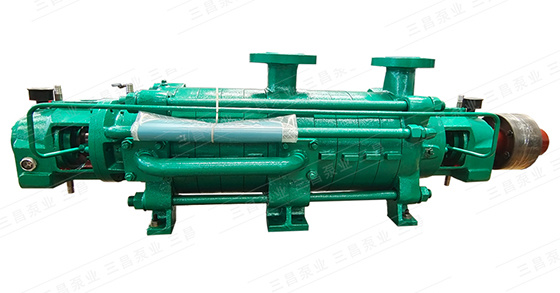
First, check the appearance of the multi-stage pump regularly. The pump body should be observed for signs of cracks, leaks or severe corrosion. At the same time, ensure that the connection between the pump body and the base is stable and the seal is intact.
Secondly, regular cleaning of multi-stage pump filter. Over time, the filter screen of the multi-stage pump may accumulate impurities and dirt, which will affect the normal operation of the pump. Therefore, regular cleaning of the filter screen can maintain the efficient operation of the pump.
Third, maintain the lubrication system of the multi-stage pump. Ensure the adequacy and quality of lubricating oil and provide adequate lubrication to pump bearings and seals. At the same time, replace the lubricating oil regularly to avoid problems caused by excessive use.
In addition, regularly check the motor and electrical system of the multistage pump. Ensure that the motor is operating normally and the electrical connection is reliable to avoid circuit failures or power supply problems.
In addition, the cooling system of the multistage pump also requires regular maintenance. Check whether the cooling water circulation is smooth, clean the cooler and cooling tower, and ensure the normal operation of the cooling system.
Finally, the performance of the multistage pump is tested regularly. By monitoring the flow, pressure, speed and other parameters of the pump, the running state of the pump is judged, and the problem is found and solved in time.
1. maintenance
The pump shall be disassembled and repaired when necessary (vibration, noise, bearing temperature, etc. exceed the allowable value, flow rate, head drop, etc.).
1. When carrying out maintenance work, spare parts shall be prepared in advance. When purchasing, the name, material and quantity of spare parts shall be indicated, as well as the pump model, name, factory date, factory number, etc.
2. Disassemble according to the reverse of assembly sequence. After disassembly, the rust spots on the parts should be removed and then repainted.
3. Check the clearance between the impeller and the sealing ring. Refer to the following table for the replacement standard:
4, check the wear of the shaft sleeve, generally grinding out grooves, diameter wear 1-2 ㎜ should be replaced.
5. Check the wear of impeller, bearing and packing (mechanical) seal and other parts.
6. Replace the seal (such as packing, O-ring, paper pad, etc.).
7. Assemble according to the assembly sequence. Rotate the rotor of the pump after assembly, it should be smooth and even.
2. inspection items for each overhaul
1. Check the wear of rotating parts.
2. Check the gap between the impeller and the sealing ring.
3. Check the cavitation, corrosion and erosion of the impeller and its runner parts.
4. Check the wear of bearing and packing (mechanical) seal.
5. Check the spindle deformation.
3. routine maintenance and inspection items
1. Check the cooling and lubricating water supply system, piping lines and pumps for water leakage. If there is water leakage, repair it immediately.
2. Check whether all kinds of instruments, especially the suction and discharge pressure gauges, indicate normal operating conditions.
3, regularly determine the vibration value and often pay attention to whether the noise increases.
4, timely adjustment of the packing seal leakage, leakage of water droplets is appropriate (about 20-30 drops per minute). When the packing gland cannot be adjusted or the packing is rotten, and the leakage cannot be reduced by adjusting the gland nut, the packing should be replaced. When replacing the packing, it should be noted that the joints of two adjacent packings must be staggered by about 120 °.
5. Regularly check and adjust the pump and motor to ensure concentricity.
6, regular inspection of grease: under normal circumstances, after 100 hours of operation for the first time, all the new lubricating grease should be replaced. After 120 hours of operation, the consumption of lubricating grease in the bearing box should be checked regularly, and appropriate amount of grease should be added or replaced with new lubricating grease. The lubricating oil level should be kept at the normal position, not too high or too low, and timely supplement when it is too low (the user can also determine the grease change cycle according to the actual site and use experience).
The normal operation of the bearing is within the range of 40 ℃-60 ℃, which is the temperature measured on the bearing body. If the temperature is kept constant, it is also possible to slightly exceed the above range. If the bearing temperature exceeds 80 ℃ (if there is no thermometer, touch the bearing seat with your hand and feel hot and cannot stay, indicating that the temperature is too high), alarm will be given. If it exceeds 85 ℃, the pump unit will stop and check.
8. Keep the unit clean and make operation records: startup, shutdown time, pressure gauge reading, current, voltage, frequency, speed, vibration, noise, ambient temperature, bearing temperature, stuffing box leakage, suction water level and other data.
9. The pump should be overhauled once for 16000 hours of continuous operation. During the overhaul, all the moving parts should be strictly checked, and those exceeding the allowable value should be repaired and replaced.
10. The standby pump should be driven every 15 days. If conditions permit, start a running time of not less than 5 minutes. Unconditional, you can use manual turning.
11. For long-term idle pumps, the pumps shall be disassembled, coated with anti-rust oil, and assembled and sealed. The rotor shall be rotated by 180 ° every three months to prevent the shaft from bending.
To sum up, the daily maintenance and maintenance of multi-stage pumps is essential to ensure the normal operation and prolong the service life of the pump. Regular inspection of the appearance, cleaning of the filter screen, maintenance of the lubrication system, inspection of the motor and electrical system, maintenance of the cooling system and performance Testing is a necessary measure to maintain the efficient operation of multi-stage pumps. Only scientific and reasonable daily maintenance and maintenance can give full play to the role of multi-stage pumps, ensure the smooth progress of the project.
RELATED INFORMATION
Recommend Products
Contact Us
Free Hotline:+86 18142662779
Fixed telephone:+86 19313001794
Mobile:+86 18142662779(WeChat/WhatsAPP)
E-mail:info@sanchangpump.net




Hunan Sanchang Pump Co., Ltd.
| Email: | info@sanchangpump.net |
| Hotline: | +86 181 4266 2779 |
| +86 193 1300 1794 | |
| Mobile/Wechat/WhatsApp: | +86 181 4266 2779 |
| Address: | No.517,Xiangfu Road, Yuhua |
| District, Changsha City | |
| Hunan Province, P.R.C |
